A gym or leisure venue needs space that works for its customers and a budget that works for its operator. A clear finance brief separates buying the premises from equipment, fit-out and the cash needed while the business grows.
Your home or property may be repossessed if you do not keep up repayments on your mortgage or other loans secured upon it. Delays can increase costs. A sale or refinance is not guaranteed.
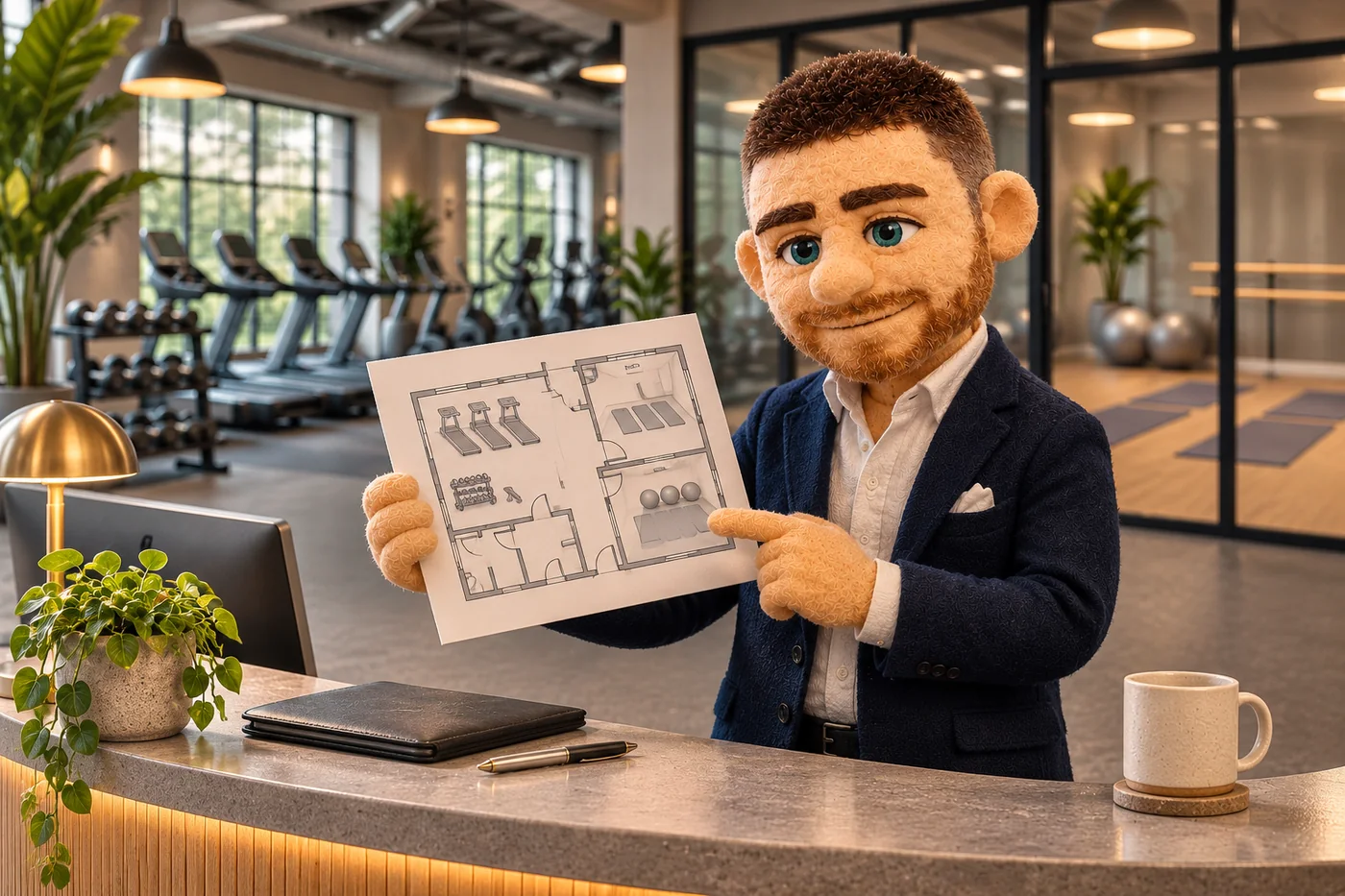
AI-generated Puppet Jack illustration. The scenarios below are invented examples.
The starting point
A commercial mortgage may be considered when buying or refinancing gym or leisure property. If you rent the premises and only need equipment or fit-out funding, that is a different enquiry. Explain the property interest, operator and use of funds first so the conversation starts in the right place.
General preparation for UK fitness and leisure premises. No particular loan product, funding limit or permission is established here. Legal, planning, building and safety requirements need checking for the actual venue and proposed activity.
From a small studio to a larger fitness business
For a personal-training, Pilates or other small studio, explain who delivers the sessions, the timetable, repeat bookings and the costs of covering the owner’s absence. Separate recurring memberships from prepaid class packs and one-off sessions. A small building still needs a realistic fit-out and operating reserve.
For a larger gym or health club, break down membership income, personal training, classes and any pool, spa, café or other activity. Identify the operator’s income and the income of independent trainers or concessions. Show staffing, maintenance and equipment commitments alongside member numbers.
For several sites, provide results and occupancy costs for each location. Explain management capacity and the cash committed to the existing venues. A second site’s forecast should not simply copy the first site’s strongest month. The property purchase, gym equipment and working capital need separate budgets even when they belong to the same expansion plan.
Distinguish the building from the gym business
Start with what you own or plan to buy: the freehold, a leasehold property interest or an operating business. Show the proposed borrower and operator. If you are buying the building you already rent, explain the current lease and how the purchase would change the business’s commitments.
For a landlord purchasing property let to a leisure operator, the tenancy and property income need their own review. For an owner-operator, bring the trading figures and the costs of running the venue. The owner-occupied premises guide covers the broader purchase questions.
Does the request concern property, business assets, equipment or several of these?
Who will own the building and who will operate the venue?
Are changing rooms, studios, courts or pools included?
Will any part be let to an independent trainer or another business?
Show recurring income and the cost of delivering it
Prepare monthly income and spending. Distinguish active paying members from enquiries, trial passes or registrations. Explain membership cancellations, payment collection and any prepaid income, alongside classes, personal training, court hire or other activities.
Keep an established venue’s results separate from forecasts for a new location. If existing members are expected to move across, show the evidence and any effect on the original site. Growth assumptions should allow for the time and cost of attracting and retaining customers.
Ask what cash remains for the property commitment after staffing, utilities, equipment agreements, maintenance and other operating costs. A membership target is a planning assumption, not proof of repayment capacity.
Check the venue and opening budget together
Ask the relevant professionals to check whether the building and permissions suit the intended use. Describe the equipment, operating hours and customer activity; ventilation, access, noise and the proposed layout may all need investigation. A venue with a pool or specialist facilities needs an appropriately detailed brief.
Separate the property contribution from fit-out, equipment, professional costs, applicable taxes and the opening reserve. Identify any equipment finance or lease commitments already in place. Do not assume movable equipment or marketing costs can be included in a property mortgage.
Test a later opening date and slower membership growth, or disruption during work at an established venue. If you will remain in rented premises, say so at the first enquiry so a property purchase is not assumed.
Property, borrowing and the question to resolve
Two situations to think through
These are original, invented examples for discussion. They are not client cases, lending decisions, offers or completed transactions. Amounts are borrowing requests, not confirmed loan availability.
Illustrative situation
A small fitness studio buying its premises
A studio operator is considering purchasing a unit rather than renewing its tenancy.
Funding request
£250,000, illustrative only
Property
Owner-operated fitness studio
Preparation focus
Repeat bookings and fit-out costs
Questions to work through
Separate established session income from future growth and account for work performed by the owner. Budget for the property contribution, fit-out and cover during a move. This is an invented borrowing request, not a completed transaction.
Illustrative situation
A larger operator adding another gym
A fitness business is considering acquiring a further property while continuing to run its existing venues.
Funding request
£2.5m, illustrative only
Property
Additional gym or health-club premises
Preparation focus
Site-level results and expansion cash
Questions to work through
Show each venue’s trading and commitments separately. Identify acquisition, works, equipment and working capital, with a slower membership build-up at the new site. Existing membership numbers do not guarantee the new location’s income or finance approval.
Your next conversation
Send an outline, even if the detail is still taking shape
These four points make a useful first enquiry. You do not need every document ready. The checklist stays on this page and does not send information.
0 of 4 ready
Share a short summary first. Please arrange a secure route with Jack before sending identity documents, bank statements or detailed financial records.
It may be a route to discuss where you are buying the property. The borrower, building, trading position and repayment plan need assessment. A guide or initial enquiry cannot establish that a loan is available.
What if I only want to finance gym equipment?
State that at the outset, especially if the venue is rented. Equipment funding is a different question from a commercial property mortgage. Jack can clarify the scope of the enquiry and whether separate specialist input is needed.
Can a new leisure venue be discussed before it starts trading?
Yes, as an initial conversation. Make clear that it is a new operation and separate projections from actual trading evidence. Bring the operator background, cash contribution, permissions and full opening budget; finance is not assured.
Sources and scope
Primary sources checked on 20 November 2026. The preparation prompts and scenarios are editorial explanations. Follow the source guidance for its full scope and current information; individual finance terms require a separate assessment.
Your home or property may be repossessed if you do not keep up repayments on your mortgage or other loans secured upon it.
Some buy-to-let, bridging, commercial and development finance is not regulated by the FCA. The applicable protections depend on the transaction. Confirm the service scope and terms before proceeding.